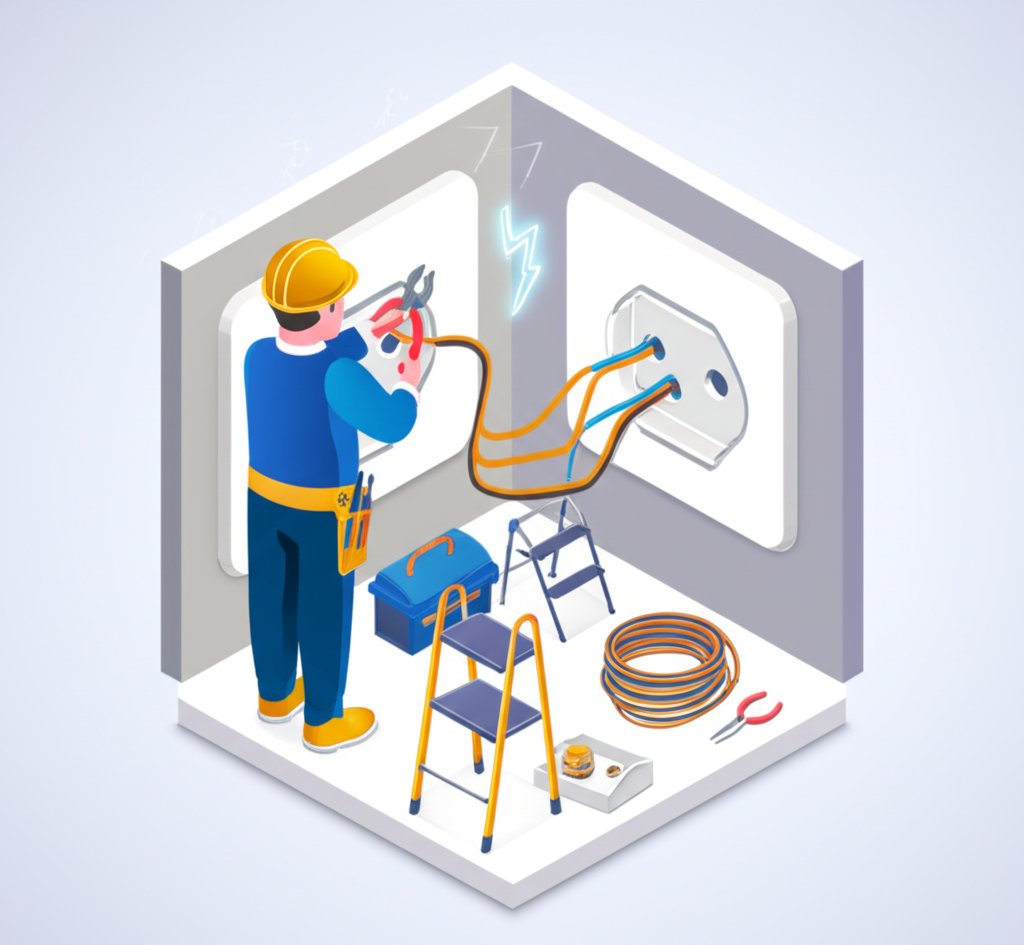
Navigating your home's electrical system can feel like deciphering an ancient language, especially when things go awry. Whether it's a flickering light, a tripping breaker, or the need for a major upgrade, finding the best electrician in Trussville isn't just about fixing a problem—it's about ensuring your family's safety and your home's long-term health. You need a trusted partner, someone who brings expertise, reliability, and clear communication to every job.
This guide is designed to empower you with the knowledge to make an informed decision, turning the potentially overwhelming task of hiring an electrician into a straightforward process.
At a Glance: Key Takeaways for Hiring an Electrician in Trussville
- Prioritize Licensing & Insurance: Always verify an electrician's Alabama state license and ensure they carry liability and worker's compensation insurance.
- Seek Local Reviews: Check platforms like Google, Yelp, and Angi for insights into customer satisfaction and service quality.
- Get Multiple Estimates: Obtain detailed, written quotes from at least three different electricians to compare pricing and scope of work.
- Communicate Clearly: Don't hesitate to ask questions about the proposed work, timeline, and any potential issues.
- Understand Payment Terms: Clarify deposit requirements, payment schedules, and what forms of payment are accepted upfront.
- Ask About Warranties: A reputable electrician will offer a warranty on their work and parts.
More Than Just a Spark: Why Professional Electricians Are Non-Negotiable
You might be handy around the house, but when it comes to electricity, the stakes are simply too high for DIY experiments. Electrical work gone wrong isn't just inconvenient; it's dangerous, leading to potential fires, electrocution, and significant property damage.
Think about it: Your home's electrical system is a complex network that powers everything from your morning coffee to your evening movie. Any misstep can disrupt that flow, creating hazards you might not even realize are there. A professional electrician has the training, tools, and understanding of local codes to ensure every connection is safe, compliant, and efficient. They see the hidden risks and know how to mitigate them, protecting your most valuable asset—your home—and the people inside it.
The Hallmarks of a Truly Great Electrician
So, what separates an average electrician from the absolute best in Trussville? It comes down to a blend of technical skill, professional conduct, and a genuine commitment to customer satisfaction. Here’s what to look for:
Licensing & Certification: Your First Line of Defense
Any legitimate electrician working in Trussville, AL, must hold an active license issued by the Alabama Electrical Contractors Board. This isn't just a piece of paper; it signifies that they've met stringent requirements, passed exams, and demonstrated competency.
- Verify their license: Don't just take their word for it. Ask for their license number and verify it on the Alabama Electrical Contractors Board website. This simple step can save you immense headaches down the line.
- Specialized Certifications: Some electricians pursue additional certifications in areas like smart home technology, energy efficiency, or specific wiring types. While not always mandatory, these can indicate a higher level of expertise for specialized projects.
Insurance: Protecting Everyone Involved
Accidents happen. What if an electrician gets hurt on your property? What if they accidentally damage your home? This is where insurance comes in.
- Liability Insurance: This covers damage to your property that might occur during the electrical work.
- Worker's Compensation Insurance: This protects the electrician's employees if they get injured on your job site.
Always ask for proof of both types of insurance. A reputable electrician will gladly provide it. If they hesitate, consider it a significant red flag.
Experience & Reputation: The Wisdom of the Crowd
Experience matters, especially in a field as intricate as electrical work. An electrician who has been serving the Trussville community for years has likely encountered a wide array of problems and developed efficient solutions.
- Years in Business: Look for companies with a established track record.
- Local Knowledge: Electricians familiar with Trussville's specific building codes and common older wiring types (if applicable in certain neighborhoods) can offer more precise and efficient service.
- Online Reviews & Testimonials: Sites like Google, Yelp, and Angi (Angi, a platform known for connecting homeowners with qualified professionals, allows users to [Angi.com] find top-rated electricians and compare services) are invaluable resources. Look for consistent positive feedback about professionalism, punctuality, fair pricing, and quality of work. Pay attention to how a company responds to negative reviews, too – it can reveal a lot about their customer service ethos.
- References: For larger projects, don't hesitate to ask for references from previous clients.
Clear Communication & Transparency: No Guesswork
A great electrician isn't just skilled with wires; they're also excellent communicators.
- Detailed Estimates: They should provide a clear, written estimate that breaks down labor costs, material costs, and any potential contingencies. Avoid vague or verbal quotes.
- Explaining the Work: They should be able to explain the problem and the proposed solution in terms you understand, avoiding overly technical jargon.
- Timelines & Expectations: They'll give you a realistic timeframe for the project and keep you updated on progress or any delays.
- Upfront Pricing: Ethical electricians are transparent about their pricing structure. They won't hit you with hidden fees.
When to Call a Pro: Recognizing Common Electrical Red Flags
Sometimes, electrical problems are obvious (a total power outage). Other times, they're more subtle, giving off warning signs that shouldn't be ignored. Here are common issues that warrant a professional's attention:
Outlets That Need Frequent Resetting
If you find yourself constantly hitting the reset button on a GFCI outlet, it’s more than just an annoyance. According to experts, if your outlet needs to be reset multiple times, you likely have a problem with the outlet, the reset button, the wiring, or its connected circuit breaker. If the reset button doesn’t work and the circuit breaker isn’t the issue, it’s likely a problem with the outlet or the reset button it’s attached to. This could indicate a faulty outlet, a wiring issue, or an overloaded circuit. An electrician can diagnose the root cause and ensure your system is safe.
Flickering or Dimming Lights
Lights that flicker or dim, especially when you turn on other appliances, can signal an overloaded circuit or loose wiring. This isn't just an aesthetic issue; it can pose a fire hazard.
Burning Smells or Scorched Outlets
Any burning smell emanating from an outlet, switch, or electrical panel is an immediate emergency. Similarly, visible scorch marks around outlets or switches mean severe overheating and require immediate professional intervention. Turn off the power to that circuit at your main panel and call an electrician right away.
Frequent Breaker Trips
Circuit breakers are designed to trip when a circuit is overloaded to prevent damage or fire. If a specific breaker trips often, it means that circuit is regularly drawing too much power. This could be due to too many devices plugged in, or a more serious issue with the wiring or an appliance itself. An electrician can assess the load and recommend solutions, such as dedicated circuits or panel upgrades.
Warm Outlets or Switches
It's normal for certain high-power devices to cause outlets to feel slightly warm, but if an outlet or switch feels hot to the touch, or if there's no visible load, it's a sign of a problem, potentially loose connections or faulty wiring that could lead to a fire.
Outdated Wiring: The Case of Knob and Tube
Homes built before the 1940s might still have knob and tube (K&T) wiring. While not inherently dangerous if in good condition and unaltered, K&T wiring lacks a ground wire and its insulation can become brittle over time. Experts advise caution, stating that if you touch knob and tube wiring, its casing is brittle. This means that it's possible to receive a dangerous electrical shock if you touch a live wire and essentially become an electrical pathway. Although the scenario is unlikely, touching any K&T wiring is simply not a good idea in any instance. Leave any wire handling to the professionals. Many insurance companies are reluctant to cover homes with K&T wiring. If your home has it, a professional assessment for replacement or upgrade is highly recommended.
What to Expect During the Hiring Process
Hiring an electrician in Trussville should follow a predictable, professional path. Knowing what to expect will help you gauge the quality of the service provider.
- Initial Contact & Inquiry:
- You call or email with your problem or project description.
- A good company will respond promptly, often with a live person.
- They'll ask clarifying questions to understand the scope.
- On-Site Visit & Assessment (for larger jobs):
- For anything beyond a simple repair, the electrician should schedule a visit to your home.
- They'll visually inspect the issue, ask questions, and potentially test components.
- Be ready to clearly articulate your needs and concerns.
- Detailed Estimate:
- You should receive a written estimate (email is fine) that clearly outlines:
- Scope of work (what exactly will be done)
- Itemized costs for labor and materials
- Projected timeline
- Payment terms (deposit, payment schedule)
- Warranty information
- Don't be afraid to ask for clarification on any line item.
- Scheduling the Work:
- Once you approve the estimate, the electrician will schedule a start date and provide an estimated completion time.
- They should arrive on time, prepared with the necessary tools and materials.
- During the Work:
- The work area should be kept clean and organized.
- The electrician should communicate any unexpected issues or changes to the plan.
- They should adhere to all safety protocols.
- Completion & Walk-Through:
- Upon completion, the electrician should conduct a walk-through with you, explaining what was done and ensuring everything works correctly.
- They should clean up thoroughly.
- You should receive an invoice that matches the approved estimate (or clearly explains any agreed-upon changes).
Understanding Electrical Work & Your Home
To help you communicate more effectively with your chosen electrician, here's a brief look at some common electrical components and questions:
Wires and Voltage: Not All Are Created Equal
It wouldn’t be abnormal to view all wiring as simply wiring, but wiring has different gauges and can handle different loads. When you’re wiring for 240V, you need wire that is rated at least 240V, but honestly it’s better to spend a little more and just buy 300V wiring. This ensures a margin of safety in case the wiring gets overloaded. Always defer to your electrician for the correct wire gauge and type for any application. They also know how much of a wire should you strip? Using a wire stripper/cutter, strip about 1/2 inch to 1 inch of sheathing from electric wires, depending on the application. A self-adjusting wire stripper/cutter works best, but a standard wire stripper/cutter with holes for different gauges of wire works as well to cut and strip away the sheath without damaging the copper wire inside.
Electrical Panels: The Heart of Your System
Your electrical panel (or breaker box) is the central distribution point for all electricity in your home. Over time, panels can become outdated or insufficient for modern electrical demands. Signs you might need a panel upgrade include:
- Frequent breaker trips
- Flickering lights
- Burning smells from the panel
- Reliance on extension cords
- Adding major new appliances (EV charger, new HVAC, hot tub)
- A home still using a fuse box
An electrician can assess your current panel and recommend if an upgrade is necessary to handle increased load and improve safety.
Lighting Solutions: From Practical to Ambiance
Lighting plays a huge role in your home's functionality and atmosphere. Electricians can help with:
- Fixture Installation: Installing ceiling fans, chandeliers, pendant lights, recessed lighting, and outdoor lighting.
- Switch Upgrades: Replacing old switches, installing dimmers, or smart switches.
- Troubleshooting: Fixing non-working lights or flickering issues.
Regarding pendant lights, they are very versatile, and you can almost always find one with your preferred style that accepts your preferred bulb. Today, many fixtures use LED bulbs, though it’s still completely possible to find one that uses halogen, fluorescent, or even old-school incandescent bulbs. The manual that comes with your light should tell what types of bulbs you can use with it. An electrician can also advise on energy-efficient LED upgrades that can save you money and reduce your carbon footprint.
Cost Considerations: Investing in Electrical Safety
The cost of electrical work can vary widely based on the type of service, the complexity of the job, and the materials required. Simple repairs might range from a couple of hundred dollars, while major panel upgrades or whole-house rewiring could run into several thousands.
- Hourly vs. Flat Rate: Some electricians charge by the hour, plus materials. Others offer flat-rate pricing for common jobs. Understand which model they use.
- Emergency Service: Expect to pay a premium for after-hours or emergency calls.
- Permits: For significant electrical work, a permit from the city of Trussville might be required. Your electrician should handle this, and the cost of the permit will be included in your estimate. This ensures the work is inspected and meets local safety codes.
- Don't automatically choose the lowest bid: While price is a factor, prioritize quality, safety, and a good reputation over just saving a few dollars. A cheaper, unqualified electrician could end up costing you far more in future repairs or, worse, safety hazards.
Your Electrical Safety Checklist
While a professional electrician is key, there are things you can do to maintain electrical safety in your Trussville home:
- Test GFCI Outlets Monthly: These are typically found in kitchens, bathrooms, laundry rooms, and outdoors.
- Never Overload Outlets: Avoid "octopus" connections with multiple power strips.
- Use Proper Extension Cords: Only use extension cords temporarily and ensure they are rated for the intended use (indoor/outdoor, appropriate gauge).
- Keep Water Away from Electronics: Self-explanatory, but crucial.
- Unplug Unused Appliances: Especially when leaving for extended periods.
- Be Mindful of Child Safety: Use outlet covers.
- Know Your Main Breaker Location: In an emergency, you might need to shut off all power to your home.
Final Steps to a Brighter, Safer Home
Finding the best electrician in Trussville means taking a proactive approach. Start your search by asking friends and neighbors for recommendations, then cross-reference those with online reviews and professional directories. Contact a few top contenders, outline your needs, and request detailed estimates. Pay close attention to their responsiveness, their willingness to answer your questions, and the clarity of their proposals.
By prioritizing licensed, insured professionals with a strong local reputation and transparent communication, you're not just hiring someone to fix a wire—you're investing in the safety, efficiency, and comfort of your home for years to come. Don't settle for less when it comes to something as vital as your electrical system.